Crypto Ledger Private Keys: Secure Storage Analysis
Secure element protection and why keys never leave the device.
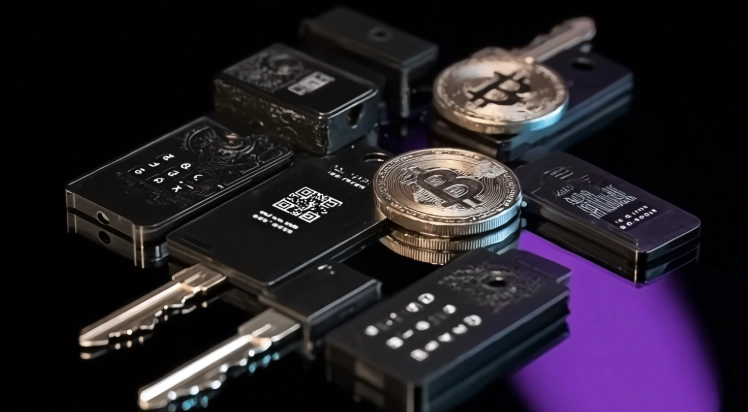
Crypto Ledger Private Keys receive protection through specialized secure element chips designed specifically for cryptographic key storage and operation. Private keys represent the ultimate control over cryptocurrency assets, making their protection the fundamental requirement for any wallet solution. The secure element approach ensures keys never exist outside protected hardware, eliminating the exposure risks inherent in software-based storage where keys must be loaded into device memory for transaction signing.
Crypto Ledger Secure Element technology derives from decades of development in banking smartcards, government identification systems, and payment card security. The chips undergo rigorous certification testing that validates their resistance to physical tampering, side-channel attacks, power analysis, and fault injection attempts. This level of protection exceeds what general-purpose computing devices can provide regardless of software security measures applied. This page explains how private keys are stored, protected, and used within the Crypto Ledger architecture.
How Private Keys Are Stored in Crypto Ledger
Crypto Ledger private keys exist exclusively within the secure element chip from the moment of generation through all subsequent operations. The keys are generated inside the secure element using a hardware random number generator, stored in protected memory regions, and used for transaction signing without ever being exposed to external systems. The companion software and connected devices never receive key material, only the resulting cryptographic signatures after signing operations complete.
This storage architecture differs fundamentally from software wallets where encrypted keys are stored on general-purpose devices and must be decrypted into memory for signing. During decryption and signing, software wallet keys become vulnerable to memory scanning, process injection, and other software-based extraction techniques. The secure element eliminates this vulnerability by performing all cryptographic operations internally without key exposure.
Role of Secure Element Chip
Crypto Ledger secure element implements multiple protective mechanisms:
| Protection Mechanism | Function | Attack Prevented |
|---|---|---|
| Encrypted storage | Key data encryption at rest | Physical memory reading |
| Access control | Authentication before operations | Unauthorized key usage |
| Tamper detection | Physical intrusion sensing | Device opening attacks |
| Side-channel resistance | Power/timing masking | Power analysis attacks |
| Fault injection protection | Abnormal condition detection | Glitching attacks |
| Secure boot | Firmware integrity verification | Malicious code execution |
The ST33K1M5 secure element used in current Ledger devices holds CC EAL5+ certification, indicating rigorous testing against sophisticated attack methodologies. This certification level exceeds typical consumer electronics security and matches standards applied to banking and government security applications.
Why Keys Never Leave the Device
Crypto Ledger key isolation represents a fundamental architectural decision that eliminates entire categories of attacks affecting other wallet types. When keys remain permanently inside the secure element, attackers cannot extract them through software vulnerabilities, network attacks, or malware regardless of how thoroughly they compromise connected devices.
The isolation architecture works through asymmetric cryptography principles. The secure element holds private keys internally and performs signing operations that produce cryptographic signatures. These signatures prove transaction authorization without revealing the underlying private keys. Connected devices receive only signatures, which cannot be reversed to derive the original keys.
Key isolation provides protection even in scenarios where:
- The connected computer has active malware infection
- Attackers have complete remote access to the user's system
- Phishing attacks have captured login credentials
- Network traffic is being monitored or manipulated
Only physical possession of the hardware wallet combined with the correct PIN enables transaction signing.
Key Generation and Derivation
Crypto Ledger private keys originate through a carefully designed generation process that establishes security from the initial moment of wallet creation. The hardware random number generator inside the secure element produces entropy that seeds key generation, ensuring randomness that cannot be predicted or reproduced by attackers. This hardware-based randomness exceeds the quality available from software random number generators on general-purpose computers.
The generation process follows BIP-39 and BIP-32/44 standards that enable deterministic derivation of unlimited keys from a single master seed. This approach means the 24-word recovery phrase serves as a complete backup for all current and future accounts across all supported cryptocurrencies. The standards ensure compatibility with other wallet implementations, enabling recovery on alternative hardware if needed.
Recovery Phrase and Key Hierarchy
Crypto Ledger secure element generates and protects the master seed from which all keys derive:
- Secure element generates 256 bits of random entropy.
- Entropy converts to 24 BIP-39 mnemonic words.
- Words display on hardware screen for user recording.
- Mnemonic converts to master seed through PBKDF2.
- Master seed enables derivation of account keys.
- Account keys derive individual address keys.
- Each cryptocurrency uses standardized derivation paths.
- Unlimited addresses generate from single master seed.
The recovery phrase appears only on the hardware wallet screen, never on connected computer displays. This prevents screen-capturing malware from recording the phrase during generation. Unlike software wallets where phrase entry occurs through keyboard input vulnerable to keyloggers, Ledger's hardware-based generation maintains security throughout the process.
Comparison with Other Storage Methods

Crypto Ledger private keys storage differs significantly from alternatives including software wallets, exchange custody, and other hardware wallet architectures. Understanding these differences helps users appreciate the specific protections hardware wallets provide and the limitations of other approaches.
Software wallets store encrypted keys on user devices, requiring decryption for signing operations. During this window, keys exist in device memory where malware can potentially extract them. Even sophisticated encryption cannot protect keys during active use on compromised devices. Hot wallets connected to exchanges face similar vulnerabilities plus additional custody risks.
Hardware vs Software Key Storage
| Storage Method | Key Location | Vulnerability Window | Attack Resistance |
|---|---|---|---|
| Ledger secure element | Certified chip | None (keys never exposed) | Very high |
| Trezor microcontroller | General MCU | During signing | High |
| Software wallet | Device storage | During use | Moderate |
| Exchange custody | Third party | Continuous | Variable |
| Paper wallet | Physical document | During import | Low (single use) |
| Brain wallet | Memory | During use | Very low |
The cold wallet approach of hardware devices provides superior protection by maintaining key isolation throughout the wallet lifecycle. Unlike hot wallets with continuous network exposure, cold storage eliminates remote attack possibilities entirely.
For security architecture, see our Crypto Ledger Security guide. For phishing protection, visit Crypto Ledger Phishing Protection. For safety analysis, see Is Crypto Ledger Safe.
Frequently Asked Questions
Private keys exist inside the ST33K1M5 secure element chip, stored in encrypted protected memory regions that resist physical and electronic extraction attempts.
The secure element is designed to resist extraction by sophisticated attackers with physical access. No successful key extraction from Ledger secure elements has been publicly demonstrated.
After three incorrect PIN attempts, the device wipes all key material. Keys can be restored using the recovery phrase on a new or reset device.
Yes. Keys remain inside the secure element and never transfer to the connected computer. Malware cannot extract keys that never leave the hardware device.
Ledger uses CC EAL5+ certified secure elements designed for cryptographic protection. Trezor uses general-purpose microcontrollers without equivalent certification or physical attack resistance.
The genuine check process verifies device authenticity and secure element integrity. Transaction signing success confirms keys are properly stored and accessible.
BIP-39 governs recovery phrase generation, BIP-32 governs hierarchical deterministic derivation, and BIP-44 governs account structure across different cryptocurrencies.